
Vision and Focus: Understanding the Surprising Link Between Eye Disorders and ADHD
As parents and educators, we are always looking for ways to support children who struggle with attention and focus. A groundbreaking nationwide study published in 2026 has revealed a significant connection that might change how we approach these challenges: children with eye disorders are at a higher risk of developing ADHD/ADD.
What the Research Shows
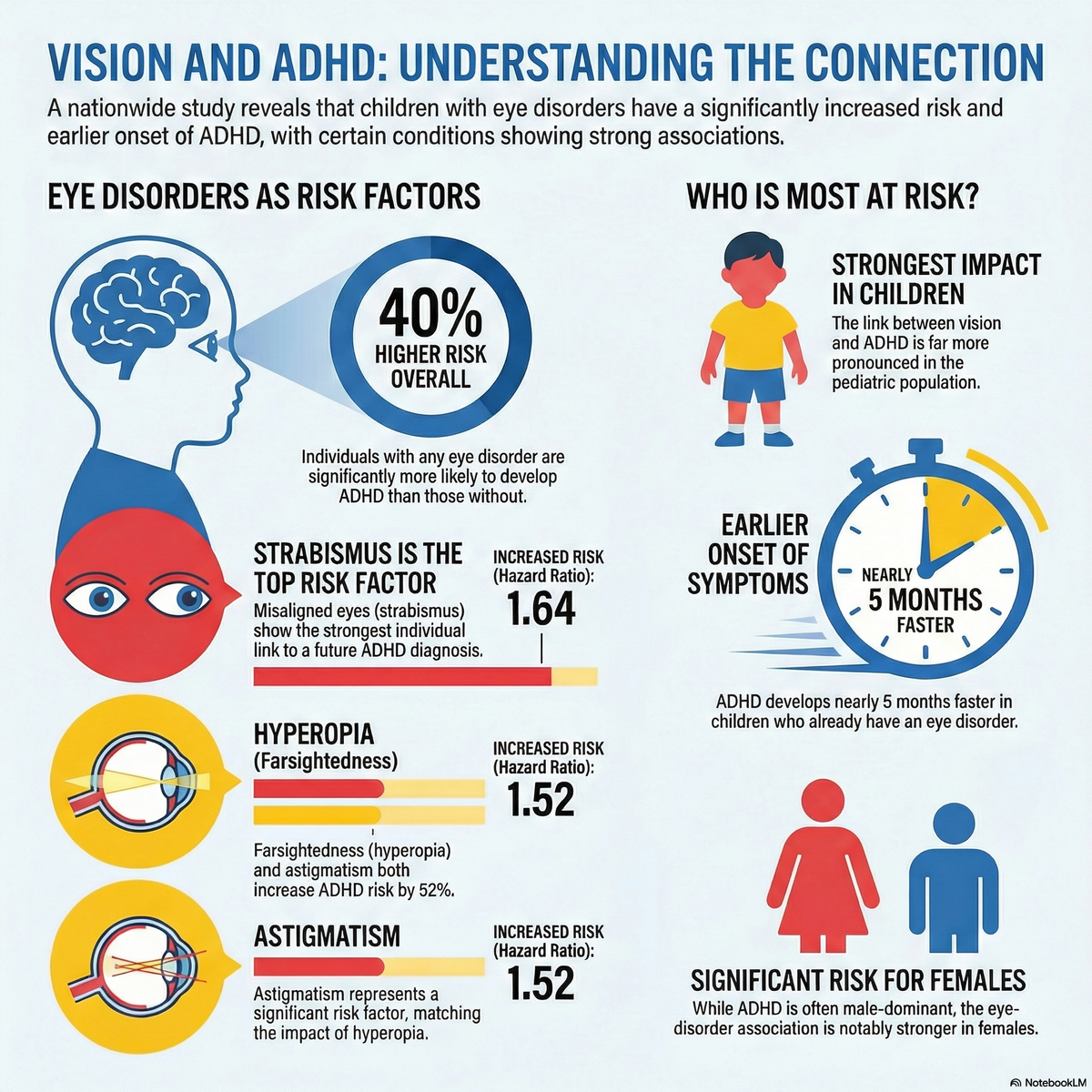
This extensive study followed over 660,000 individuals between the ages of 5 and 30. The researchers found that individuals with a diagnosed eye disorder were 1.4 times more likely to develop ADHD/ADD compared to those without vision issues.
The study looked at several common eye conditions, all of which were found to be significant risk factors:
- Strabismus (crossed or misaligned eyes): Carried the highest risk (1.64 times more likely).
- Hyperopia (farsightedness): 1.52 times more likely.
- Astigmatism: 1.52 times more likely.
- Amblyopia ("lazy eye"): 1.40 times more likely.
- Myopia (nearsightedness): 1.30 times more likely.
Notably, the study found that ADHD symptoms appeared sooner in children with eye disorders—often developing nearly half a year faster than in their peers.
Who is Most at Risk?
While the connection exists across many groups, the association was found to be significantly stronger in females and in the pediatric population. This is particularly interesting because ADHD is traditionally considered a male-dominant diagnosis.
Why the Connection?
You might wonder why a vision problem would be linked to a behavioral or neurological diagnosis like ADHD. The researchers suggest a few possibilities:
- Mimicking Symptoms: Significant visual impairment can make it very hard for a child to concentrate or stay attentive in the classroom, which can look exactly like ADHD to a teacher or parent.
- Shared Pathways: There may be overlapping neurodevelopmental or genetic factors that contribute to both eye health and brain function.
- Diagnostic Overlap: In some cases, hyperactivity or a lack of concentration during an eye exam might lead to an incorrect eye diagnosis, or vice versa.
Action Steps for Parents and Teachers
This study suggests that we should be more vigilant when a child is diagnosed with a vision issue.
For Parents:
- If your child is diagnosed with an eye disorder, particularly strabismus or farsightedness, monitor their attention levels and school performance closely.
- Discuss these findings with your pediatrician or eye doctor to see if an early neurodevelopmental screening is appropriate.
For Teachers:
- Be aware that a student "acting out" or struggling to focus may be experiencing visual strain rather than just a lack of discipline.
- If you notice a student with glasses or visible eye misalignment struggling to stay on task, suggest a comprehensive evaluation that considers both their vision and their focus.
By catching these connections early, we can ensure that children receive the right kind of support—whether that means a new pair of glasses, behavioral interventions, or both.